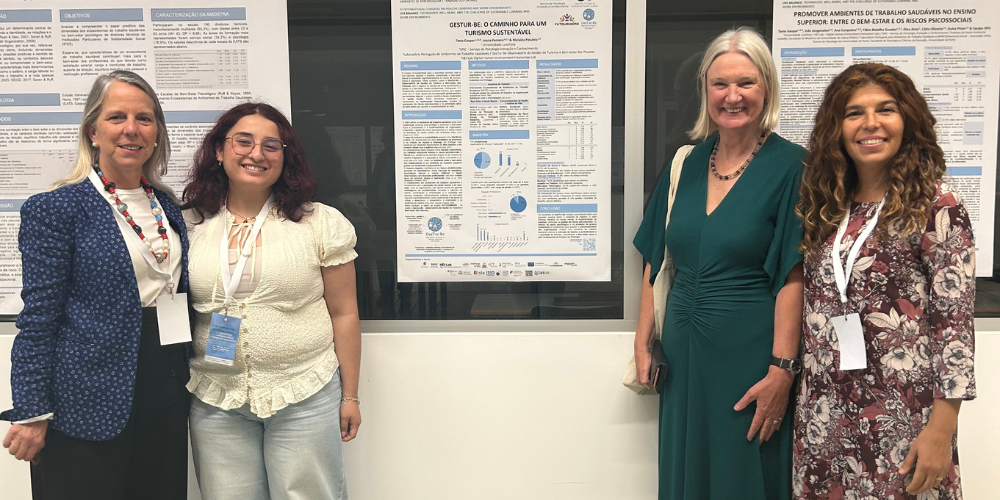
Last month, FUTOURWORK partners from the University of Westminster and Lusófona University participated in the IV International Congress on Healthy Learning and Working Environments.
The event brought together researchers, professionals, institutions and sector representatives to discuss one of today’s most pressing challenges: how to build healthier, more sustainable and more human-centred learning and working environments.
Within this broader debate, particular attention was given to the wellbeing of professionals in tourism and hospitality, a sector that is central to economic and social development, but where workers often face demanding schedules, seasonal pressure, emotional labour, job insecurity and difficulties in balancing professional and personal life.
This focus is closely aligned with FUTOURWORK’s mission. We aim to contribute to a fairer and more inclusive future of work in tourism and hospitality by strengthening workers’ representation, promoting more effective dialogue between workers, employers, unions and policymakers, and addressing structural challenges such as precarious work, platform work, gender inequalities and worker wellbeing.
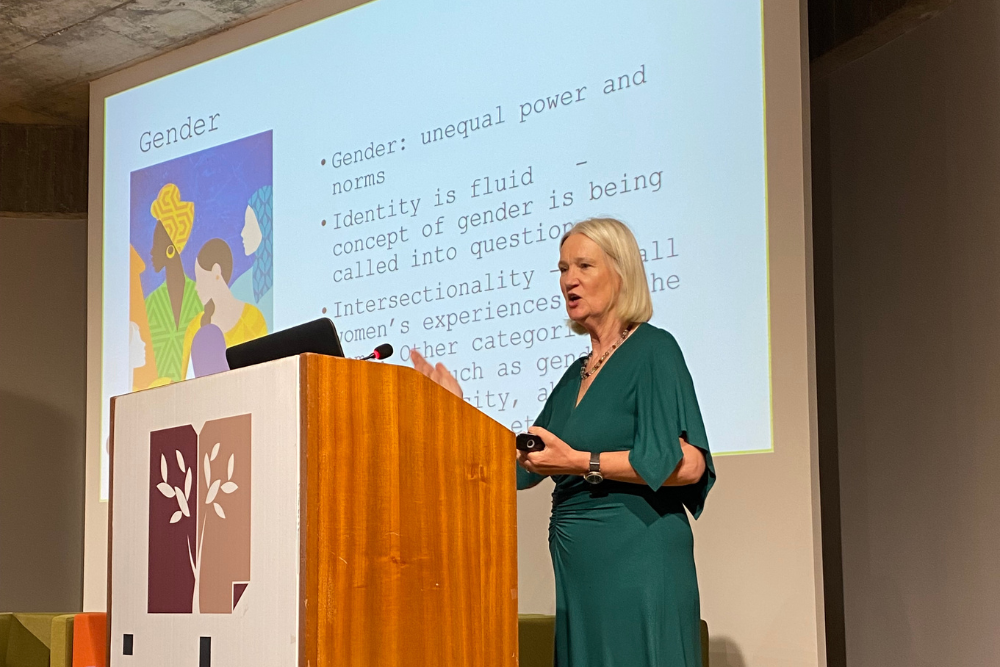
Professor Stroma Cole presenting at the Congress
At the Congress, Principal Investigator Professor Stroma Cole from the University of Westminster contributed to the discussion with a keynote lecture on Gender, Work and Wellbeing, reinforcing the importance of looking at work through an intersectional lens and recognising the diverse experiences of those who sustain the tourism and hospitality sector every day.
Lusófona University’s contribution to this agenda is strengthened through the work of GesTur.Be – Observatory for Tourism Management and People’s Wellbeing, coordinated in Portugal by Tânia Gaspar and Mafalda Patuleia. GesTur.Be brings together research, knowledge transfer and collaboration with sector stakeholders, placing organisational wellbeing at the centre of debates on the future of tourism work.
The Congress also included a dedicated panel on Tourism Management and People’s Wellbeing, moderated by Mafalda Patuleia, creating a space for dialogue between academia and the tourism sector. In addition, Tânia Gaspar presented the Annual Report of LABPATS (the Portuguese Laboratory for Healthy Workplaces) offering an overview of the laboratory’s recent scientific activity, ongoing projects and contributions to the promotion of healthier, more participatory and sustainable workplaces.
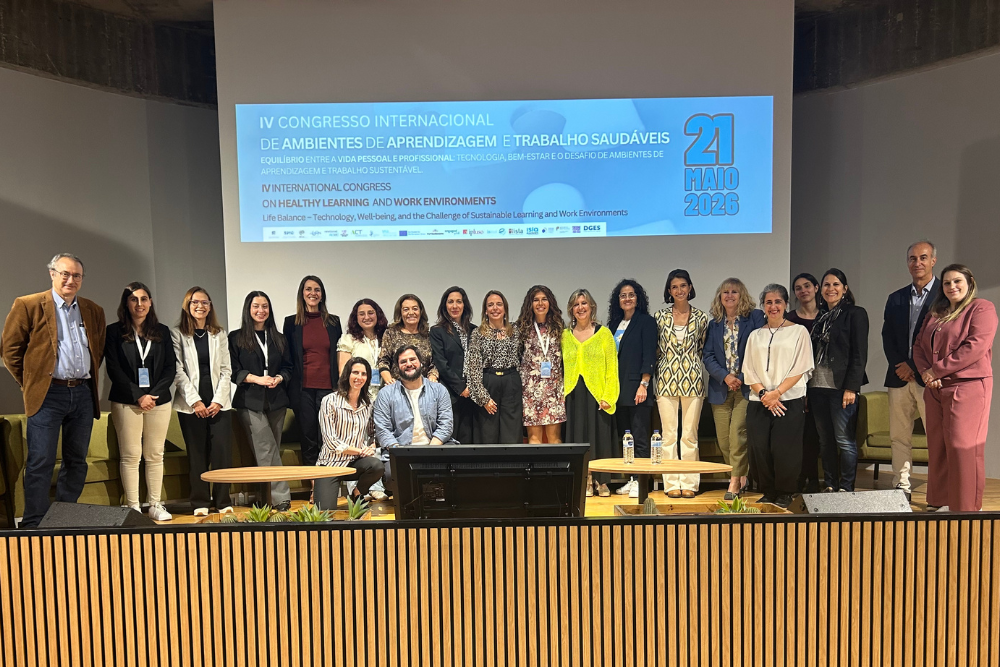
Congress participants including FUTOURWORK’s Tania Gaspar from Lusófona University
This exchange is particularly relevant at a time when attracting, retaining and valuing professionals has become one of the major concerns for tourism and hospitality organisations. By connecting the scientific agenda of healthy working environments with the European vision of FUTOURWORK, the Congress highlighted a clear message: the future of tourism cannot be discussed only in terms of growth, competitiveness or innovation. It must also be discussed in terms of dignity, wellbeing, participation and quality of work.
For FUTOURWORK, this is a key commitment. Improving tourism and hospitality means listening to workers, valuing their experiences and creating conditions for more inclusive, equitable and sustainable workplaces across Europe.
Follow us on LinkedIn or subscribe to our newsletter to stay up to date with research and events from the FUTOURWORK partners.